
India's Space Journey Started from Thumba, Now Preparing to Reach the Moon
See more of our coverage in your search results.

India's space program began in 1962 at the church in Thumba, where Dr. Vikram Sarabhai and Dr. Homi J. Bhabha established the rocket launching station. This site is located on the Earth's magnetic equator, considered suitable for scientific research.
Thumba is an ideal location for missile launches because it lies on the Earth's magnetic equator. From here, a missile is launched every third Wednesday of the month. The program started at St. Mary Magdalene Church, which was provided for the space program by the local fishing community. This church remains intact even today.
Former President Dr. A.P.J. Abdul Kalam prepared many missile development plans in the same church building. Thumba continues to be a center for regular sounding rocket launches and scientific activities.
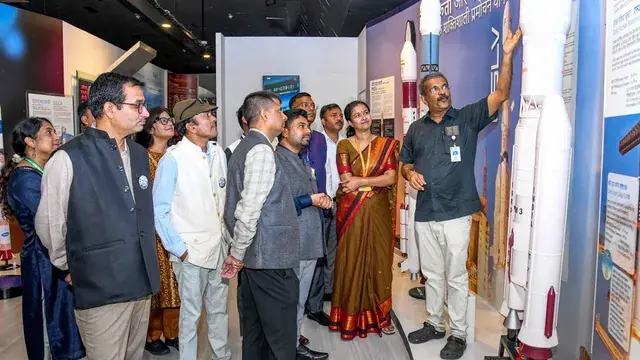
The space museum located in the church houses working models and exhibits related to satellite systems, launch vehicles, and space technology, reflecting India's growing space capabilities and self-reliance.
At the Thumba center, a special project for the Gaganyaan mission is underway, aiming to develop the capability to send humans into space. Additionally, India's long-term plans include establishing an Indian space station and ambitious goals for human space exploration.
Under India's Space Vision-2047, preparations are also being made to send Indian astronauts to the Moon. This journey reflects the development from the humble beginnings of India's space program at Thumba to today's advanced capabilities and ambitious future plans.
5 free articles left today
0 of 5 free reads used today.
Most read

Comments
0 threadsNo approved comments yet. Start the discussion.