
Millions of Children in India Are Facing the Threats of the Climate Crisis
निहारिका टाइम्स को Google पर अपना पसंदीदा सोर्स बनाए

NEW DELHI। During the 8th International Conference on Sustainability Education 2026 in New Delhi, experts stated that millions of children in India are facing threats like heat, floods, and water scarcity.
At the conference, Prof. Radhika Khosla from Oxford University said that it is not possible to understand or solve climate and sustainability issues from the perspective of a single subject. Prof. Bhaskar Vira from Cambridge University said that environmental education neither needs to scare people nor assume that technology alone will solve every problem.
CEO Priyanka Sharma said that the time to view sustainability only in terms of the environment is over. Director Kartikeya Sarabhai said that the next phase of environmental education is not just to create awareness but to prepare people for action.
Senator Sunita Narayan issued a serious warning about climate change. Referring to the recent tragedy in Nepal, she said that denying climate change now is like closing one’s eyes to reality. Continuous construction, roads, and hydropower projects in the Himalayan regions are putting great pressure on the environment. Humans need to change the mindset that mountains and rivers can be altered according to their convenience.
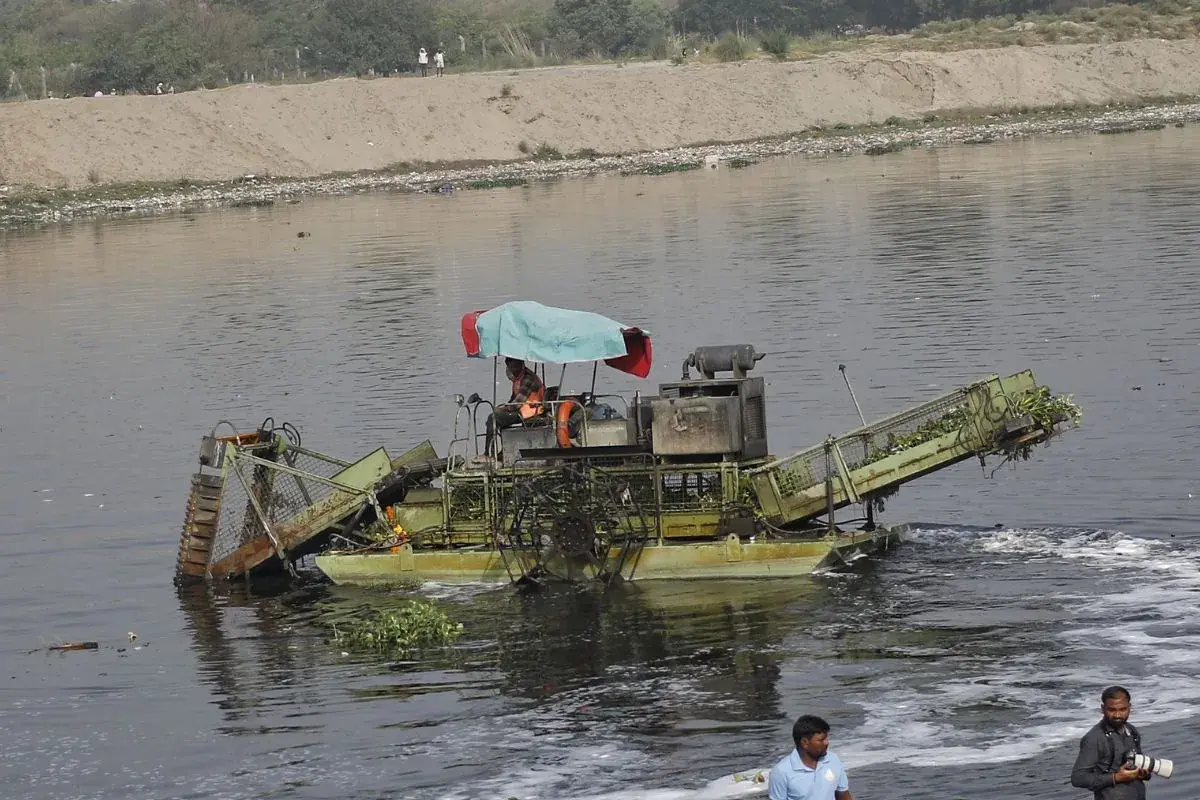
She also spoke about pollution in Delhi and said that the real need is to establish a public transport system that eliminates the compulsion for people to use cars for every small or big need. The dissolved oxygen level in the Yamuna river at its entry into Delhi is about 6, which drops to zero by the time it reaches ISBT.
Dr. Vibha Dhawan, Director General of TERI, said that the previous generation overused natural resources and now the youth have to bear the consequences. She pointed out changing daily habits like the increased use of bottled water and private vehicles as major environmental concerns.
Bo Beiskjaer of UNICEF highlighted the impact of the climate crisis on children. He said that providing children with safe schools, adequate water, and necessary facilities is now more important than ever. Youth must be given education that enables them to play a role in future decisions.
The conference also focused on issues like green jobs, critical minerals, e-waste, battery recycling, and sustainable agriculture. Experts said that the time to limit environmental education to books and awareness campaigns is over. Now it must be directly linked to action.
Environmental education should not mean just providing information in books
Kartikeya Sarabhai, Director
The climate crisis cannot be solved by a single subject
Prof. Radhika Khosla
5 free articles left today
0 of 5 free reads used today.
पाठकों की पसंद

Comments
0 threadsNo approved comments yet. Start the discussion.